The Dual Nature of Power: Exploring the Illithid Tadpole's Influence on Player Agency and Narrative Depth in Baldur's Gate 3
The Dual Nature of Power: Exploring the Illithid Tadpole's Influence on Player Agency and Narrative Depth in Baldur's Gate 3
Baldur's Gate 3 stands as one of the most ambitious role-playing experiences of its generation, not merely because of its combat systems or expansive world, but because of how tightly it binds a single, intimate horror—the mind flayer tadpole—to every layer of player decision-making. This article examines a specific, persistent issue within the game: the way the tadpole functions simultaneously as mechanical resource, narrative catalyst, and moral solvent that gradually erodes the boundary between player agency and narrative determinism. Far from a simple power-up or story hook, the tadpole becomes a structural problem that the game never fully resolves, forcing players into repeated confrontations with questions of autonomy, corruption, and the cost of survival. What follows is a chronological and thematic dissection of how this issue unfolds across the campaign, revealing both the brilliance and the friction points of Larian Studios' design.
The Inciting Infection: Establishing the Tadpole as a Core Mechanic
The game opens with the player character already infected, a bold narrative choice that immediately removes the traditional "innocent outsider" framing common to RPGs. From the first moments aboard the Nautiloid, the tadpole is not an abstract threat but a living presence inside the skull, complete with visceral cutscenes and dialogue options that acknowledge its constant pressure. This early establishment creates a unique form of body horror that is rarely sustained across an entire hundred-hour campaign.
Mechanically, the tadpole grants access to Illithid Powers, a secondary skill tree that grows more potent as the player consumes additional tadpoles or makes certain story choices. The design immediately introduces tension: these powers are powerful, often game-changing in combat, yet every use carries narrative weight. Companions notice. The world reacts. The player is never allowed to treat the ability as pure utility.
Early Mechanical Hooks
The first few hours deliberately withhold full understanding. Players can experiment with limited powers while the game withholds clear information about long-term consequences, mirroring the characters' own incomplete knowledge. This information asymmetry is intentional and effective, but it also plants the seed of the central issue: the more the player leans into the powers for survival, the more the game begins to treat resistance as an increasingly difficult path.
Act 1 Discoveries: Learning to Harness or Resist
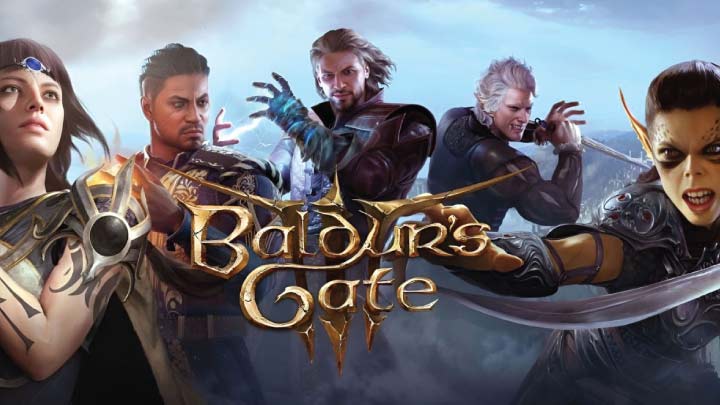
Act 1 transforms the tadpole from a personal affliction into a party-wide phenomenon. Discovering that Shadowheart, Astarion, Gale, Lae'zel, and others carry the same infection reframes the crisis as collective. The Grove, the Goblin Camp, and the Underdark all become testing grounds for how the player chooses to wield or suppress this shared power.
Dialogue options that reference the tadpole appear with increasing frequency. Some companions express curiosity, others revulsion. The game tracks these reactions through approval systems, creating early feedback loops. A player who freely uses Illithid Powers may gain mechanical advantages in key encounters while simultaneously alienating certain party members. The tension is deliberate, yet the mechanical rewards for embracing the power often outweigh the immediate social costs, introducing the first clear imbalance in the design.
Key Early Choice Points
- Using the tadpole to dominate the Absolute's forces during the Goblin Camp assault
- Resisting the urge during the first dream sequences with the Dream Guardian
- Deciding whether to share knowledge of the infection with the Tieflings or Druids
These moments establish a pattern that will intensify: the game rewards curiosity and power-seeking more readily than restraint, even while thematically praising the latter.
Companion Reactions and Early Moral Dilemmas
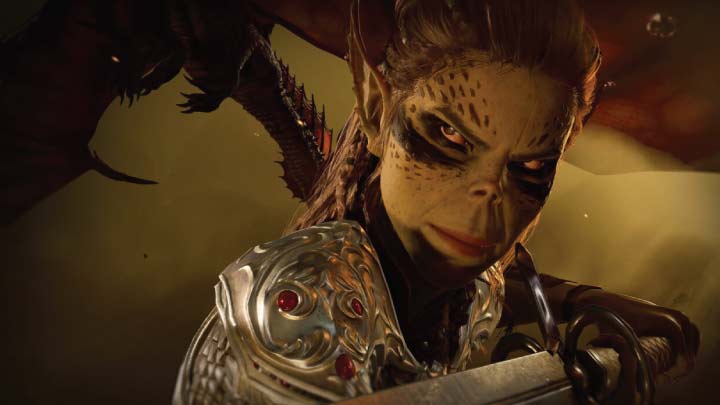
The companions do not respond uniformly. Lae'zel views the tadpole through the lens of Githyanki purity and the hunt for a cure. Shadowheart's Shar-worship adds layers of secrecy and self-denial. Astarion's history of vampiric thralldom makes him both fascinated by and wary of another form of external control. Gale's arcane hunger creates a parallel addiction narrative. These differing perspectives prevent the tadpole from becoming a monolithic plot device.
Yet the game's approval system sometimes flattens these nuances. Certain companions will approve of aggressive use of Illithid Powers if it advances their personal goals, creating situations where "role-playing consistently" with a companion's stated philosophy conflicts with maximizing their approval. This friction is rarely acknowledged by the narrative itself, leaving players to navigate an invisible tension between characterization and mechanical optimization.
The early moral dilemmas are strongest when the player must decide whether to use the tadpole's influence in conversation. Dominating a goblin or extracting information from a reluctant ally feels powerful in the moment, but the game provides limited long-term narrative feedback for these smaller acts of control, making the ethical weight feel unevenly distributed.
The Underdark and Grymforge: Escalating Temptations
Descending into the Underdark marks a tonal shift. The environment itself feels more alien, more aligned with the Illithid aesthetic. Encounters with intellect devourers, the Myconids, and the remnants of the Absolute's forces increase the frequency of tadpole-related decisions. The player begins to encounter other infected individuals whose fates serve as cautionary tales or dark inspirations.
Grymforge and the confrontation with Nere introduce the first major instance where Illithid Powers can dramatically alter a quest outcome. The ability to dominate or extract information changes the political calculus of the Duergar conflict. Players who have invested in the powers find themselves rewarded with cleaner resolutions and additional loot, while those who have resisted must rely on more conventional (and often bloodier) solutions. The design here quietly teaches that power carries practical advantages the pure path struggles to match.
Environmental Storytelling
The Underdark's visual language—bioluminescence, organic architecture, the lingering presence of mind flayer colonies—reinforces the sense that the tadpole is not an isolated anomaly but part of a larger, older ecology of control. This environmental pressure makes resistance feel increasingly like swimming against a current the world itself has accepted.
Act 2: The Shadow-Cursed Lands and Deepening Corruption
Act 2 places the party in a landscape already defined by another form of supernatural corruption—the Shadow Curse. The parallel is deliberate. Just as the curse warps land and mind, the tadpole warps identity. The Last Light Inn and Moonrise Towers become stages where the player's relationship with the tadpole is tested against the backdrop of Ketheric Thorm's own transformation and the Absolute's growing influence.
The Dream Guardian sequences intensify. What began as protective advice gradually reveals more ambiguous motives. The player's choice to embrace or reject the powers during these sequences carries heavier mechanical and narrative consequences. Those who lean into the transformation gain access to stronger Illithid abilities precisely when the story's stakes are rising, creating a self-reinforcing cycle.
Companion personal quests in this act—particularly Astarion's confrontation with his past and Shadowheart's crisis of faith—intersect with the tadpole theme in ways that feel thematically rich but mechanically uneven. The game allows the player to use Illithid influence in some of these intimate moments, raising uncomfortable questions about consent and agency that the narrative only partially addresses.
Personal Quests Intertwined with Tadpole Powers
By the midpoint of the game, nearly every major companion quest has been touched by the tadpole in some way. Astarion's hunger and desire for autonomy echo the player's own struggle with an invasive presence. Gale's need for magical artifacts parallels the temptation of Illithid power as a solution to an internal deficit. Karlach's engine and limited lifespan create a different but related meditation on bodies that no longer fully belong to their owners.
The issue becomes sharper here: the game encourages the player to treat companion traumas as solvable through dialogue and quest completion, yet simultaneously offers Illithid Powers as a shortcut or alternative path in several of these stories. When the player can simply dominate or extract information rather than earn trust, the emotional labor the game otherwise demands feels optional. This optionality undermines the thematic weight the personal quests are trying to carry.
Notable Intersections
- Astarion's ritual and the question of whether power can ever be reclaimed cleanly
- Shadowheart's decision regarding the Nightsong and the role of external influence in faith
- Lae'zel's evolving relationship with Vlaakith and the Githyanki pureblood ideology
In each case, the tadpole offers a parallel vocabulary of control and transformation that the game never fully reconciles with the companions' individual arcs.
The Astral Prism and the Emperor's Revelations
The revelation of the Emperor's true nature marks the point where the tadpole issue shifts from personal and party-level concern to cosmic. The Astral Prism sequences force the player to confront the possibility that their primary source of guidance has been an Illithid all along. This twist is narratively bold, yet it also complicates the moral framework the game has been building.
Suddenly, the distinction between "using the tadpole" and "being used by Illithid forces" becomes harder to maintain. The Emperor frames cooperation as pragmatic survival. Resistance is portrayed as risky idealism. The game's own mechanical systems have been training the player for dozens of hours to value the pragmatic path. The narrative now asks them to question that training without fully dismantling the mechanical incentives that reinforced it.
This is one of the clearest manifestations of the core issue: the systems and the story are not always in alignment. Players who have heavily invested in Illithid Powers find their character build validated by the Emperor's logic, while players who resisted may feel the story is now punishing their earlier restraint by making the final confrontations harder without equivalent narrative reward.
Act 3: Baldur's Gate and the Path to Ascension or Resistance
Act 3 brings the party into the city that gives the game its name, and with it a denser web of political, personal, and existential decisions. The tadpole's influence becomes harder to ignore as the Absolute's forces tighten their grip and the player gains access to more powerful transformations. The Orphic Hammer, the House of Hope, and the various faction quests all orbit the central question of what the player is willing to become in order to stop the Elder Brain.
The city itself feels less directly shaped by the tadpole than the earlier wilderness and shadow-cursed regions, which creates a slight tonal disconnect. While individual quests still reference the infection, the urban setting emphasizes political maneuvering and personal resolution over the body-horror intimacy of earlier acts. This shift can make the tadpole feel like a lingering obligation rather than an escalating crisis for players who have not fully committed to the transformation path.
Companion resolutions in Act 3 further highlight the issue. Some characters can achieve endings that feel thematically consistent with rejecting external control. Others have paths that seem to require or reward a more pragmatic, power-accepting stance. The game allows these divergent outcomes but does not always provide equal narrative density for the resistance-oriented choices.
Climax Choices: The Elder Brain and Final Transformations
The final sequence crystallizes the tadpole problem. The player must decide whether to dominate the Netherbrain, side with the Emperor, free Orpheus, or pursue more radical transformations. Each path carries distinct cinematic and mechanical consequences, yet the emotional and philosophical weight assigned to these options varies.
Players who have spent the entire game resisting the tadpole's influence may find that the "good" or "heroic" endings still require certain compromises or leave certain narrative threads less fully explored. Conversely, players who embraced the powers receive spectacular sequences of transformation and control that feel like the logical endpoint of the systems they invested in. The game is more visually and mechanically generous to the path of acceptance than to the path of refusal.
Structural Imbalance at the Endgame
This imbalance is not necessarily a failure of writing, but it is a failure of full systemic-narrative integration. A game that spends so many hours exploring the horror of lost autonomy ultimately makes the retention of autonomy feel like the harder, less rewarded option in its climactic moments. The tadpole, introduced as a threat to free will, ends up functioning as a more complete expression of player power than the alternatives.
Endings and Legacy: Consequences of Embracing or Rejecting the Power
The epilogue slides and final narrations attempt to reckon with the player's cumulative choices. Companions reflect on the journey in ways that acknowledge the tadpole's role, yet the reflections often feel more conclusive for those who transformed than for those who refused. The game is capable of delivering poignant, character-specific endings, but the overarching narrative about power and corruption receives its most detailed treatment along the Illithid path.
This creates a lasting issue for replayability and thematic coherence. Subsequent playthroughs reveal how thoroughly the systems were built to support and reward the embrace of the tadpole. Resistance remains possible and narratively valid, but it occupies a narrower mechanical and cinematic space. The game that began by making the infection feel like an inescapable violation ends by making its acceptance feel like the fuller realization of its own design ambitions.
In the final accounting, the tadpole is both Baldur's Gate 3's greatest narrative strength and its most persistent structural tension. It gives the story urgency, the companions depth, and the player meaningful mechanical growth. At the same time, it reveals the difficulty of building a system that simultaneously tempts, rewards, and critiques the pursuit of power without allowing the temptation to dominate the critique. The game comes closer than most to achieving that balance, yet the imbalance that remains is itself a revealing artifact of the ambitious design. Players leave the experience not only having saved or reshaped the world, but having participated in an extended argument about whether some forms of power can ever be wielded without ultimately wielding the wielder.